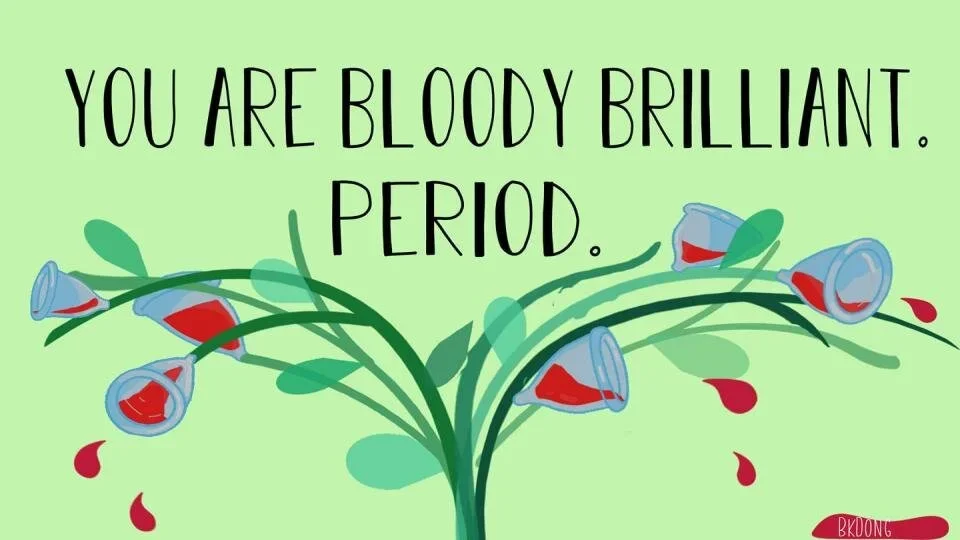
Art by B. K. Dong
Need menstrual care products?
Here is where you can find pads and tampons on Wilfrid Laurier campus
While there are these options on campus, you deserve to be able to walk into any washroom to get what you need, just like toilet paper. LSPIRG will continue to advocate until all washrooms on all WLU campuses have period products. We are also working on providing more options of products, both disposable and reusable.
Waterloo Washrooms
Science Building (one is across from Dean’s office room 1051, gendered women’s and another is across from stairs, also gendered women’s)
Library (main floor, gender neutral)
Martin Luther University College (main floor, room 105, gender neutral)
Concourse (main floor, behind OneCard, gendered women’s)
Fred Nichols Campus Centre (second floor in 24-hour lounge, one across from the vending machine that’s gender neutral, and two in the hallway around the corner)
Bricker Academic Building (gendered women’s at front door of main floor room 106, and gender neutral on 5th floor)
Arts Building (around the corner from the Hub and Concourse, gender neutral)
Peters Building (first floor beside room 118, gender neutral)
Lazaridis (first floor, gender neutral)
Athletic Complex (first floor room 117, gender neutral)
Music (Practice Studio, across driveway, gender neutral)
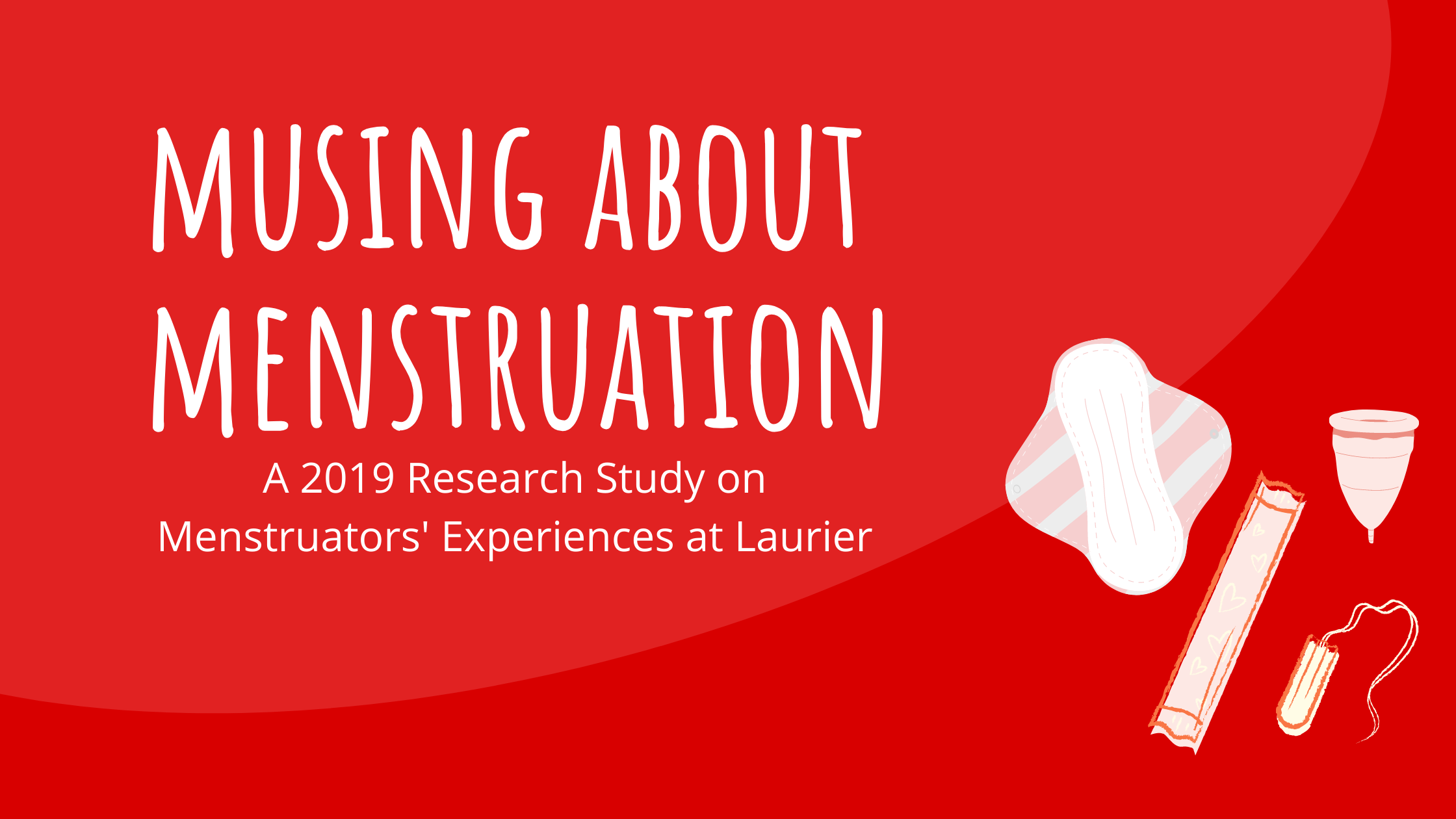
Menstrual Equity at Laurier
We all deserve equitable access to the menstrual care products we need to be present and comfortable in life. Just like toilet paper and soap, menstrual products should be free in all public washrooms. In acknowledgement of this, as of Winter 2022, Laurier students and staff have access to free menstrual care products in some washrooms in Waterloo, Brantford campuses and Kitchener.
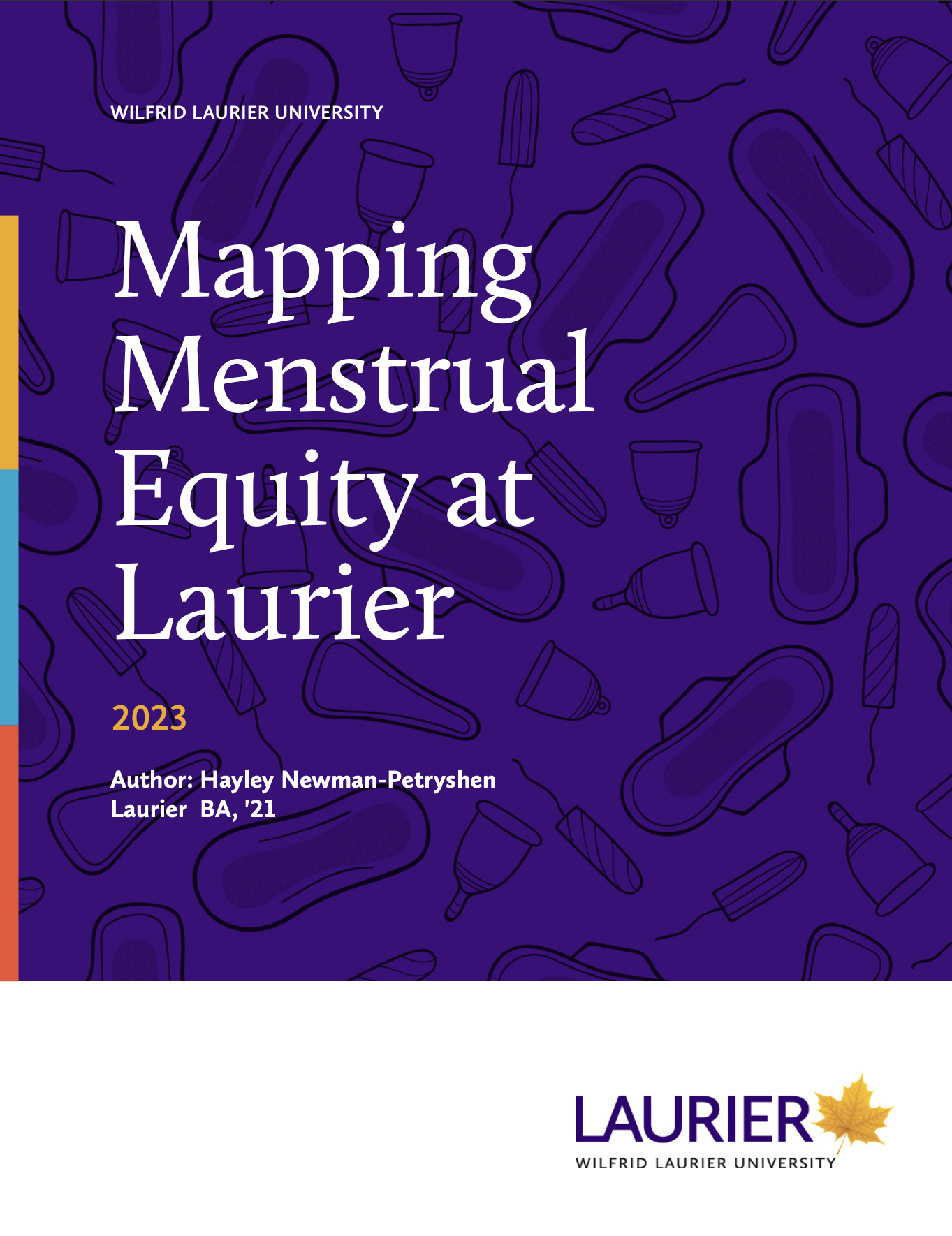
Read the full 2023 Report: Mapping Menstrual Equity at Laurier, Author Hayley Newman-Petryshen (Laurier BA, 2021) by clicking the image here.
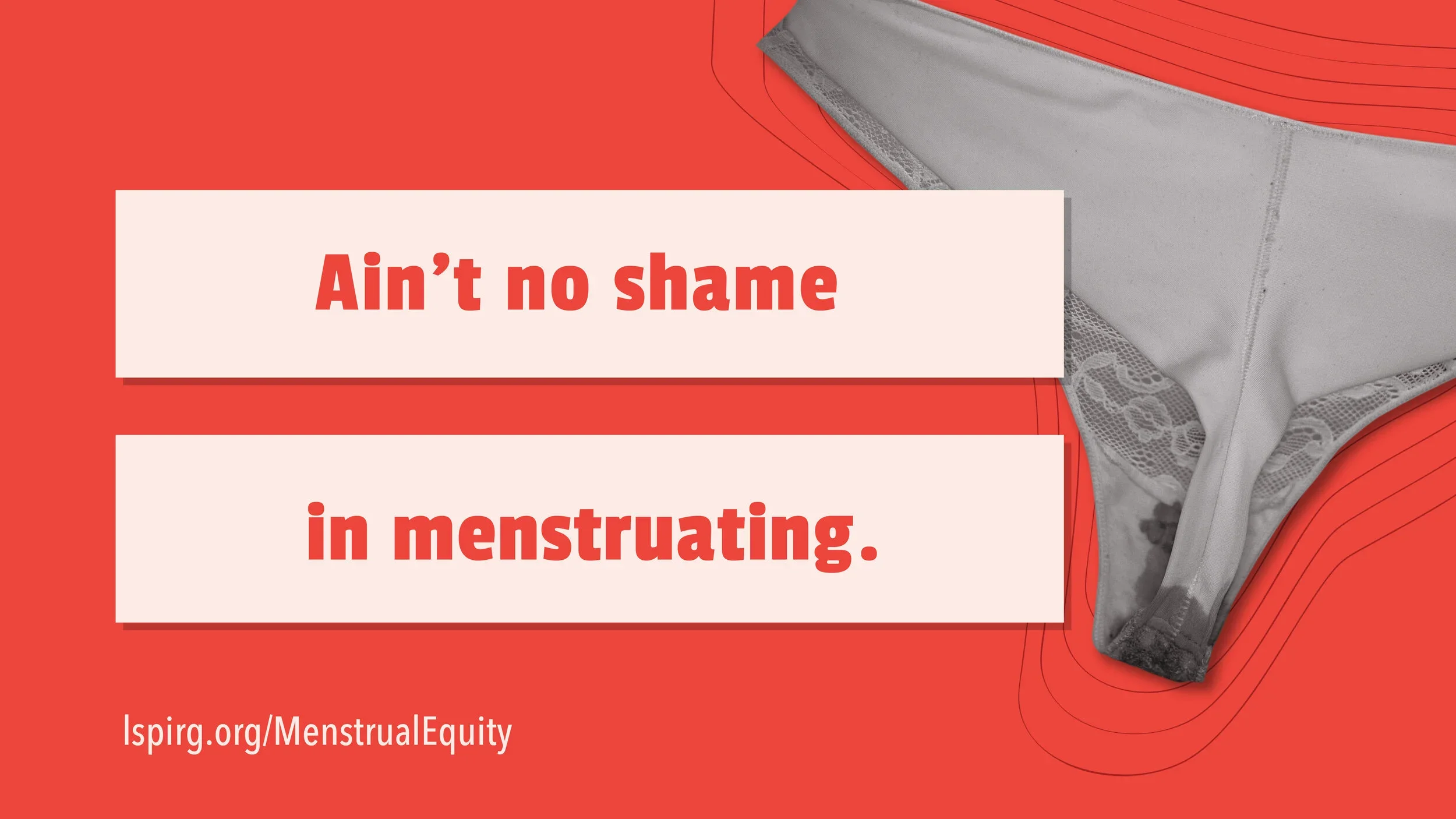
For many of us, periods are a natural, uncontrollable part of life. And yet menstrual blood is often treated as cringier than a gory scene in a movie. We aren’t used to seeing images like this because society actively hides them. TV commercials depict mysterious, transparent blue liquid on pads and avoid the words “period” or “blood” by saying things like “time of the month.”
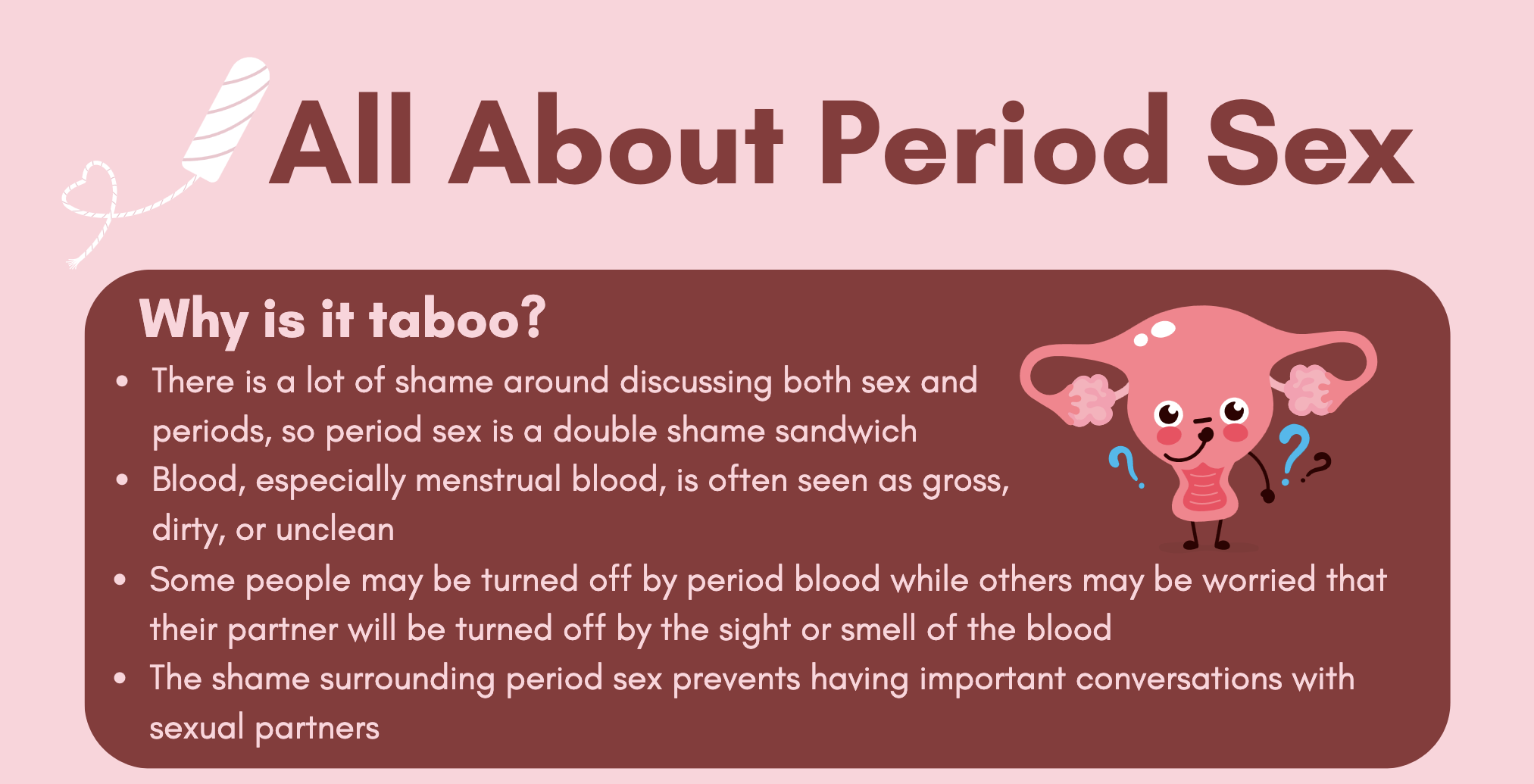
There’s nothing wrong with menstrual bleeding. There’s nothing shameful about asking for a period product, leaking onto your underwear, or menstruating during sex. Read the infographic called '“All About Period Sex” made by our volunteer, Isa Cornell.
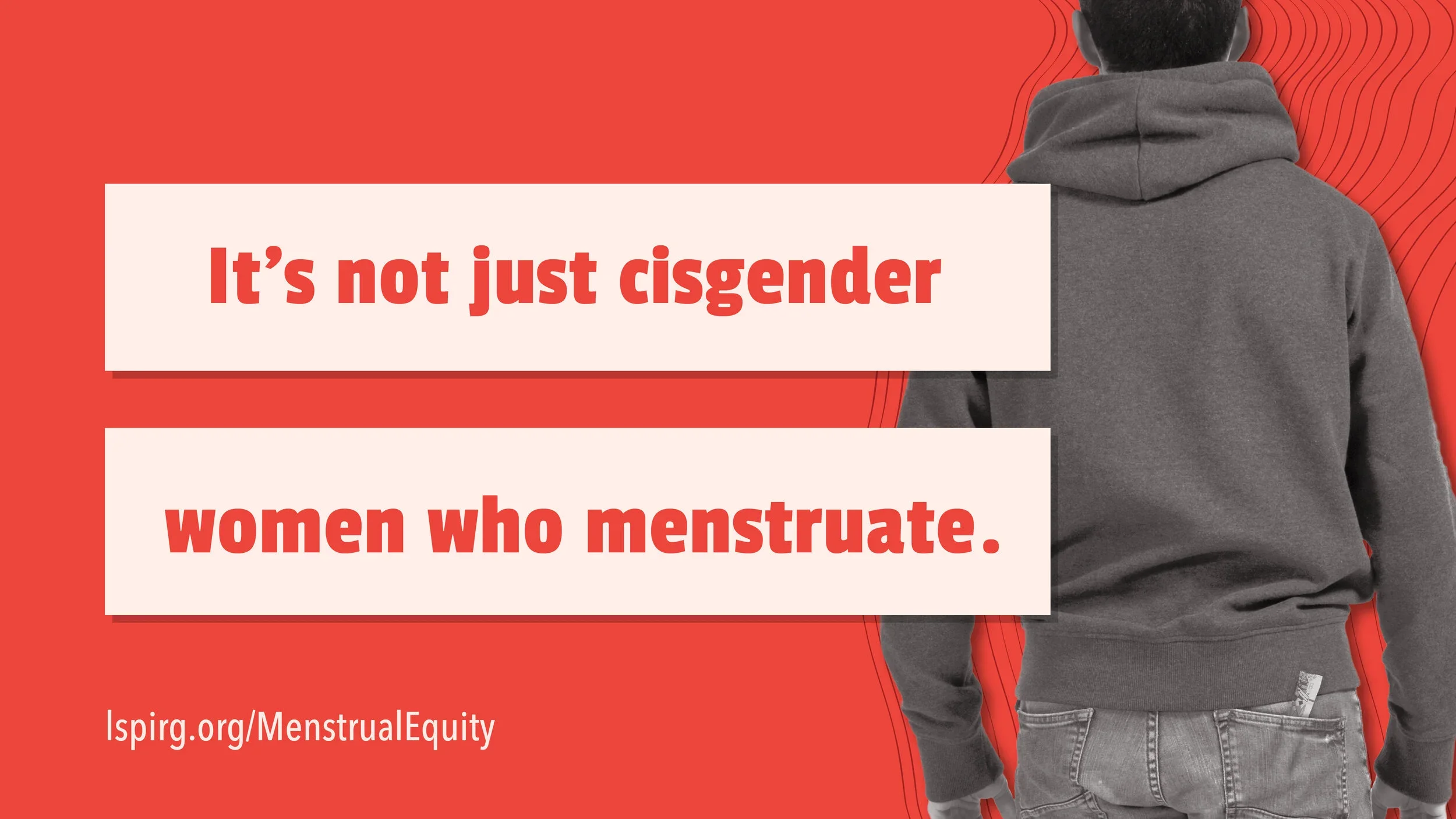
Another barrier to access is that the (in)affordability of menstrual care products disproportionately impacts trans and non-binary folks, who are more likely to be living in poverty.
75% of trans and non-binary students and staff struggle to afford menstrual care products, compared to the average of 38% for all students and staff. (LSPIRG, 2019)
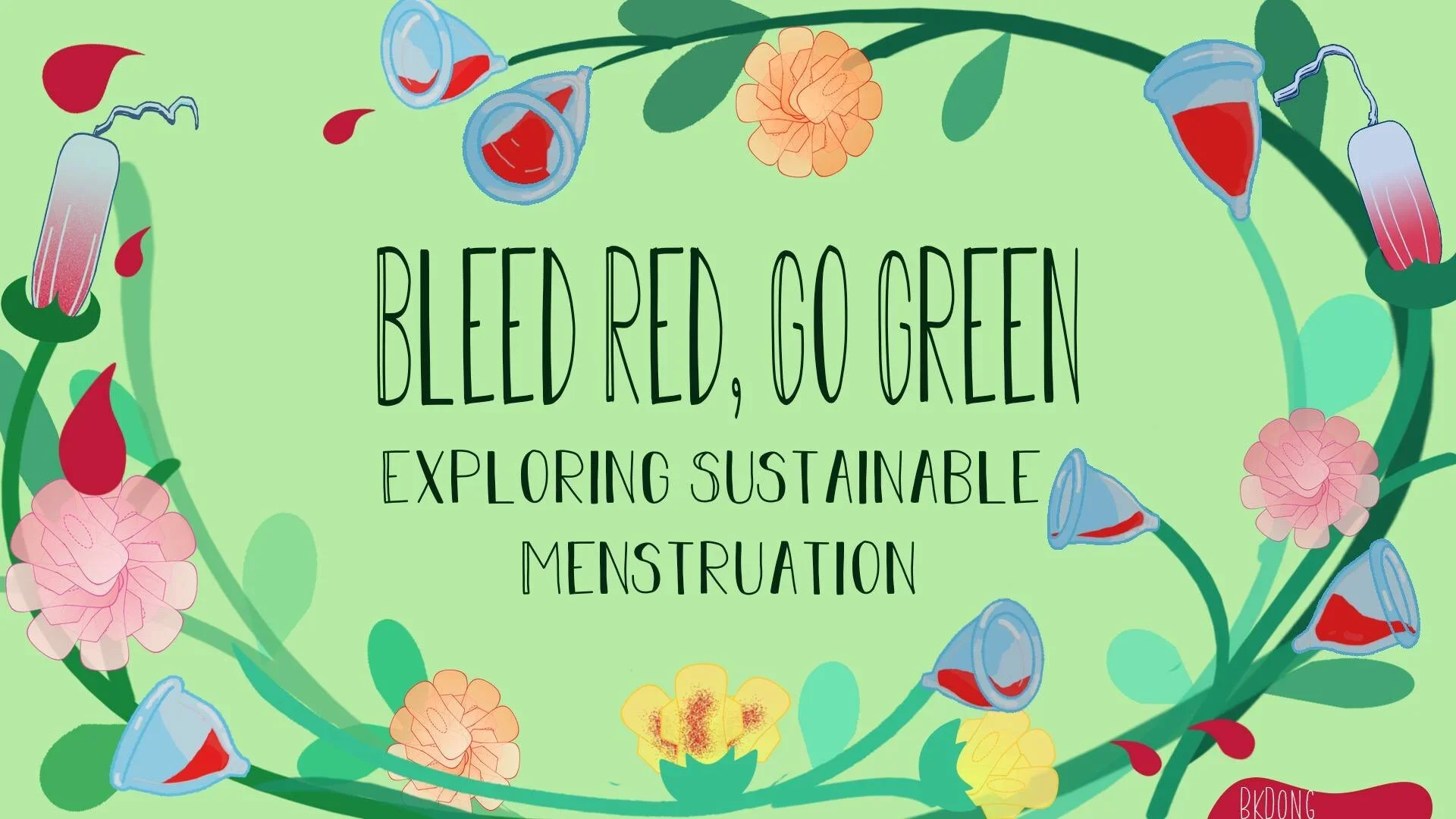
Art by B. K. Dong
Thankfully, there are TONS of options nowadays that are sustainable and affordable. For example, cardboard applicators are much less wasteful than plastic ones. But better yet, there are products you buy once and use for years.
Zero waste options that save money in the long run:
Menstrual underwear looks like normal underwear styles yet holds up to two tampons worth of blood
Menstrual cup is a silicone cup inserted for up to 10 hours and can last many years
Reusable pads come in all kinds of absorbency, shapes and lovely designs that get rinsed and machine-washed
There are also products that are partially reusable and partially disposable such as a reusable tampon applicator.
Period Poverty
We need to remember that people of all levels of income and security may menstruate, including homeless folks. Living in period poverty can contribute to feelings of shame, create lost opportunities, cause people to miss meals, and create health risks. These negative consequences are also more common for Black, Indigenous and Racialized people because of structural inequities. In order to strive for equity, we need to support those who are most in need. This is part of the reason that many Laurier offices that support marginalized students offer free menstrual products. Striving for menstrual equity means that we need to simultaneously work to end all forms of oppression including racism, colonialism, sexism, cis-sexism, ableism and queerphobia.
Do you have questions, comments or suggestions on menstrual equity at Laurier?
Reach out to us at info@lspirg.org
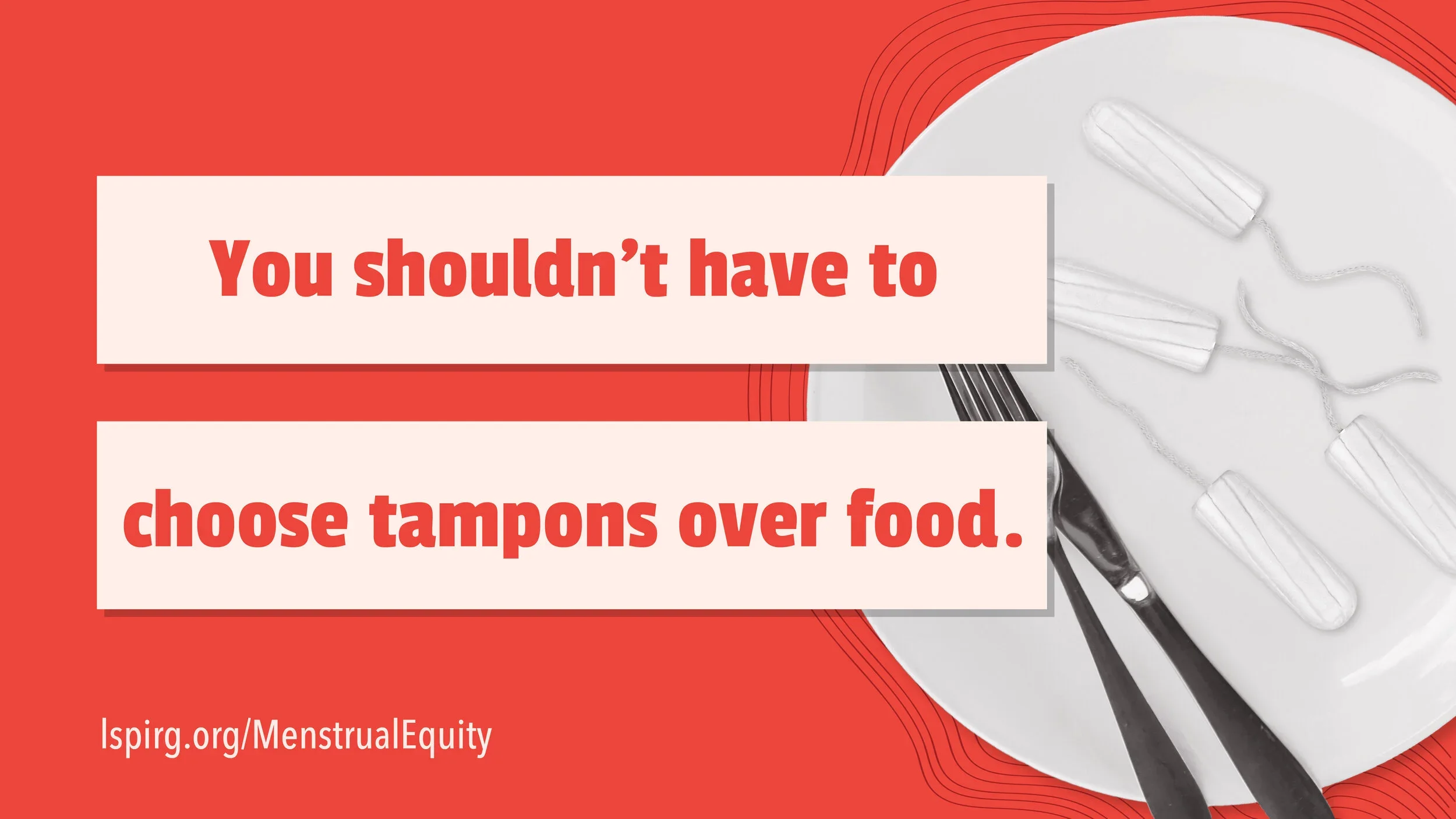
Access to menstrual care products is a right, not a luxury. Period.
Menstrual equity means that anyone who needs menstrual products should have free and ready access to them. Student advocates at LSPIRG have been working towards elevating menstrual equity in our communities, explore below to learn more and get involved.
Kitchener Washrooms
Faculty of Social Work (first floor, gender neutral)
Brantford Washrooms
Carnegie Building (basement, gendered women’s)
Grand River Hall (near GRH 101 classroom, gender neutral)
RAC East (near room 127, gender neutral)
RAC West (2nd floor near room 205, gendered women’s)
Student Centre (main floor, near rooms 102 and 103, gendered men’s and women’s)
One Market (second floor by lounge in hall, gender neutral)
Please note that dispensers in Brantford are not refilled during the summer term due to low campus activity.
Milton Washrooms
MEVIC (side entrance, gendered women’s, main entrance gender neutral, gendered women’s and gendered men’s)
LSPIRG Menstrual Advocacy
In September 2019 an undergraduate student approached LSPIRG with an idea about something she thought needed to change at Laurier.
Read undergraduate student Hayley Newman-Petryshen’s 2019 report on the experiene of menstruators by clicking the image here.
Laurier Menstrual Equity Survey
Hundreds of you participated in an online research study that is being conducted by Eden Hennessey, a researcher at Wilfrid Laurier University and Hayley Newman-Petryshen, a previous LSPIRG Board Member and now Research Associate at McGill University.
The purpose of this study is to gain insight on a project supporting Menstrual Equity (i.e., the affordability, accessibility, and safety of menstrual products) at Wilfrid Laurier University.
Data from this voluntary survey will be instrumental in guiding institutional decision-making related to Menstrual Equity at Wilfrid Laurier University. This project has Research Ethics Board Approval (#REB 8601).
When the results are ready, we will share them here. Stay tuned!
Rattled by seeing these stained panties? You’re not alone.
As menstruators, we are taught to shroud our periods in shame and secrecy: We thoroughly wrap a bloodied tampon applicator in toilet paper before putting it in a waste bin or discreetly smuggle tampons from knapsacks to pockets.
Gender Inclusive Periods
Myth: Only women get periods.
Fact: People of many genders can have periods. Some cisgender women don’t have periods (e.g. menopause, health reasons) and some trans and non-binary folks do have periods.
Everyone deserves to be able to access the menstrual products they need, which means menstrual products (note: we aren’t calling them ‘feminine hygiene products’!) should not only be available in femme spaces or “women’s” washrooms.
Plus, products that look stereotypically feminine don’t work for everyone. Period stigma is even greater for trans and non-binary folks than cis folks --as their experiences can be complexified by transphobia and gender dysphoria. That’s why options like boxer brief period underwear and gender-neutral menstrual cup pouches are so important!
It’s impossible to tell by looking at someone if they menstruate, so don’t make assumptions. Resist the cis-tem. We stand with menstruators of all genders and you should too.
If you’ve experienced harm
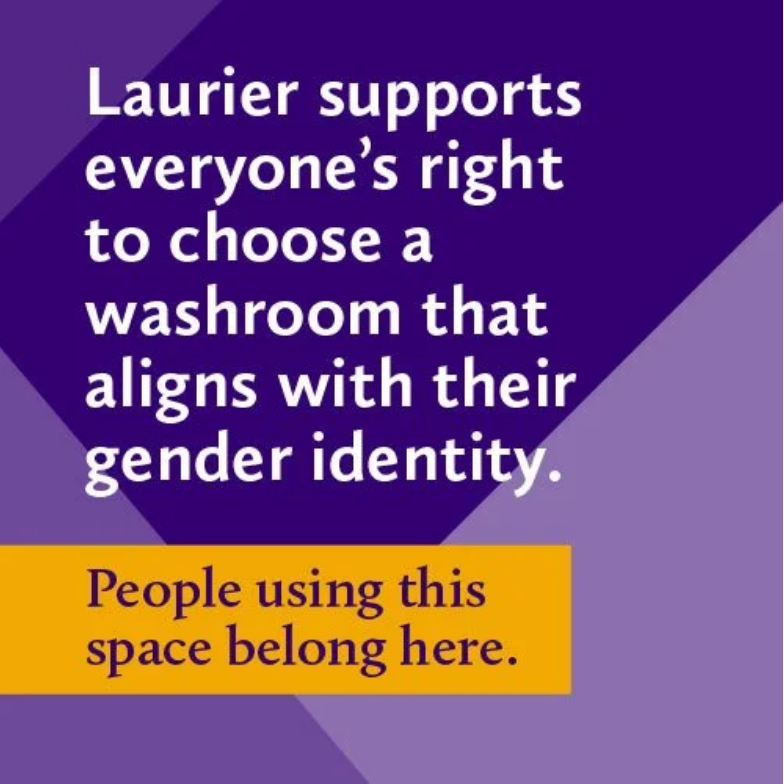
Everyone has the right to use the washroom in accordance with their lived gender identity and/or gender expression without the fear of harm or harassment as these signs in Laurier washrooms suggest. Trans and non-binary people who have experienced harm in washrooms can learn about support and reporting options at Laurier at the button below. The Inclusive Washroom Initiative also provides tips on what to do if you witness transphobia or harassment.
Menstrual Waste
It should be no surprise that disposable pads and tampons harm the environment:
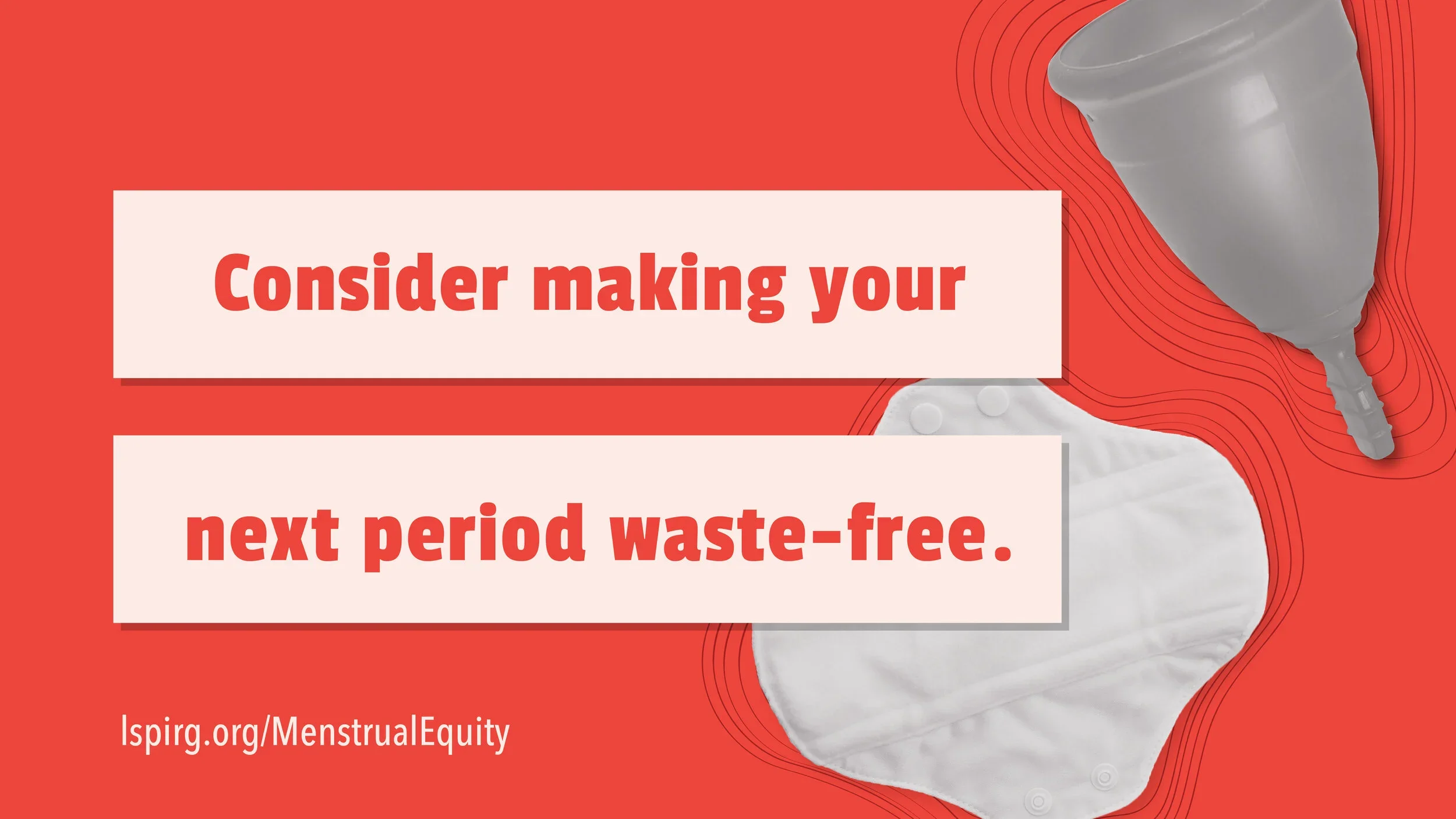
There are lots of reasons you may not use disposable menstrual products. Maybe it’s related to accessibility or perhaps you can’t afford the initial investment -- that’s not your fault and we can’t blame and shame folks. However, it’s possible to have a plastic-free period and it’s important to try to reduce your waste if you can.
Bleed red, go green.
Image credit: Bustle.
Connect with us keep pushing menstrual equity forward
There’s still so much work to be done.
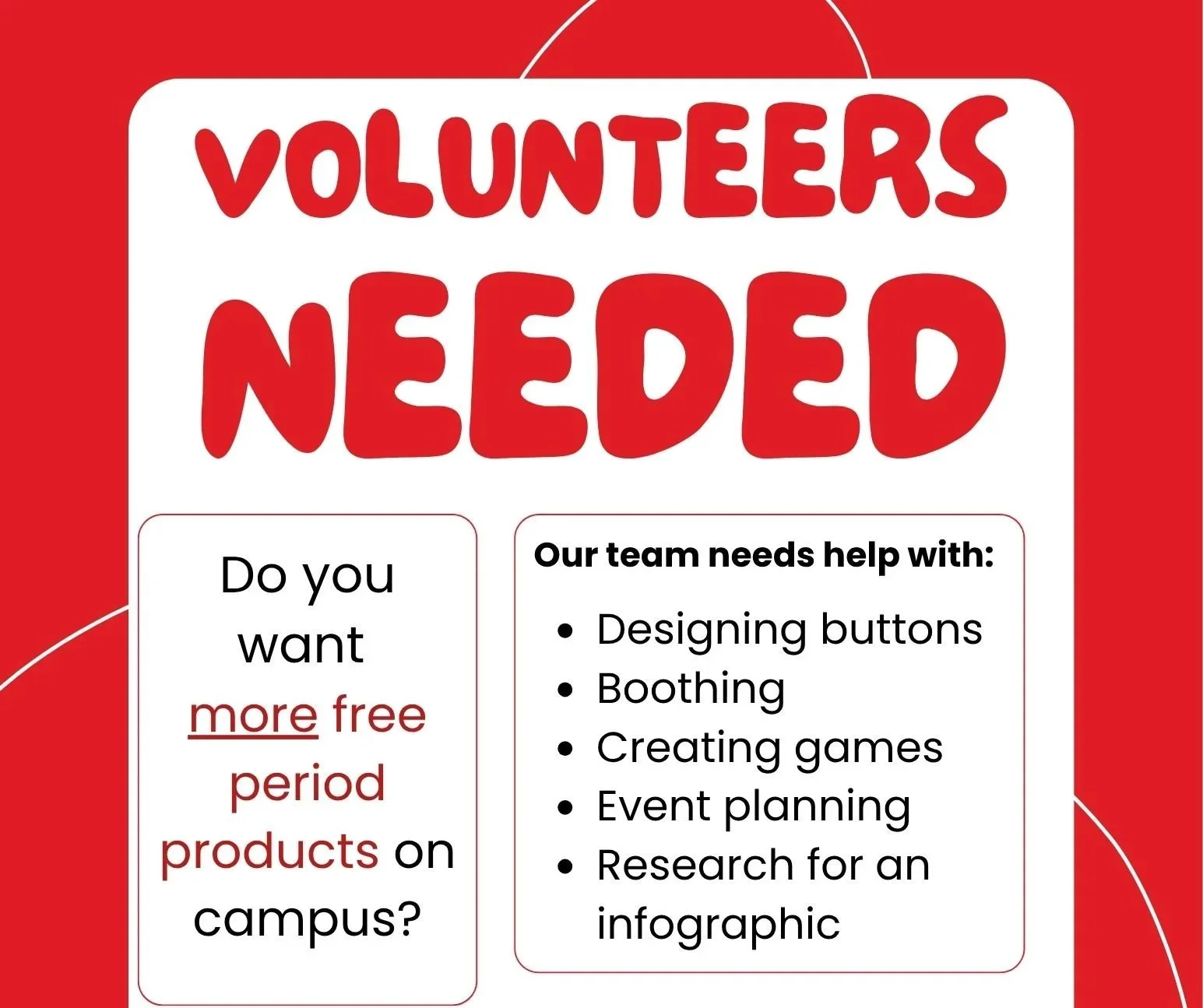
To volunteer for our menstrual equity campaign, sign up on this google form.
To volunteer for menstrual equity and any other LSPIRG programs, sign up here instead.
More on Menstrual Equity in Canada
The Period Purse
https://theperiodpurse.com/